Devlog: why the winch in Summit's Wrong is hand-cranked
A motor winch would be easier. We made ours hand-cranked on purpose: more hands on the handle means a faster pull. Here’s how one tool shapes the whole co-op.
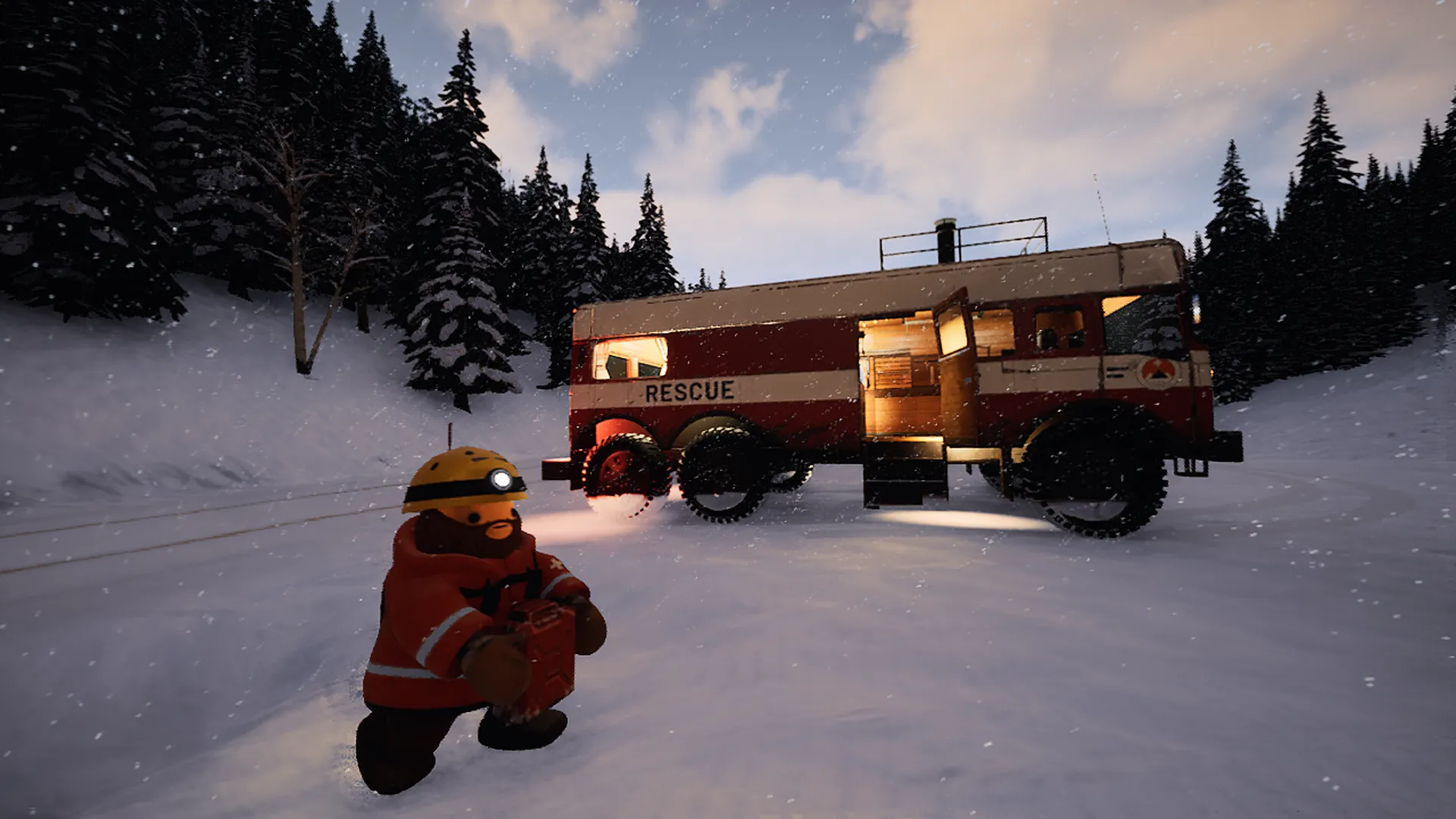
Every rescue van needs a winch. Ours, on the front bumper of the Loaf, has a handle — and that’s a deliberate design decision, not a budget cut.
The problem with buttons
The obvious way to build a winch is a button. The van gets stuck, one player presses E, the cable reels in, everyone else watches. It works, and it’s boring: three out of four players have nothing to do in exactly the moment the game is supposed to be most exciting.
That’s the trap a lot of co-op games fall into: an obstacle that one person solves while the others wait. We wanted the opposite. When the van is stuck, we want everyone running toward it.
More hands, faster pull
So the winch became a crank. You hook the cable to a tree or a rock, grab the handle and turn it. The rule is simple: the more hands on the handle, the faster it pulls. One player can do it alone, slowly. Two is noticeably better. Four puppets cranking together while the van groans up a drift is one of the best moments in the game.
The crank also creates jobs around it:
- Someone has to drive, steering the van so it doesn’t swing into the ditch while it’s pulled.
- Someone has to find an anchor — a solid tree or rock in the right direction.
- Someone can dig in front of the wheels with a shovel to make the pull easier.
- And if the drift is bad, someone goes looking for snow chains in a roadside garage.
Suddenly “the van is stuck” is not a pause. It’s a small team puzzle with a clear goal and a very loud soundtrack of friends shouting instructions at each other.
Physical, a little bit dangerous
We didn’t want the winch to be a magic “unstick” tool. The cable pulls toward whatever you hooked it to, the van has weight, and the road has edges. Where you anchor matters, and so does who is at the wheel.
That danger is important. Summit’s Wrong is funny because the stakes are real: the mountain has no guard rails, and a lost van is a lost expedition. The laugh comes from almost not making it.
One tool, many stories
The hand-cranked winch is a good example of how we think about design at Kronhold. Instead of adding more mechanics, we try to make each one involve more people. The result is fewer systems that create more stories — the kind your group retells for weeks.
Want to try cranking it yourself? Playtests are announced first on our Discord.